Editorial guide by Dream Unsaid · Updated
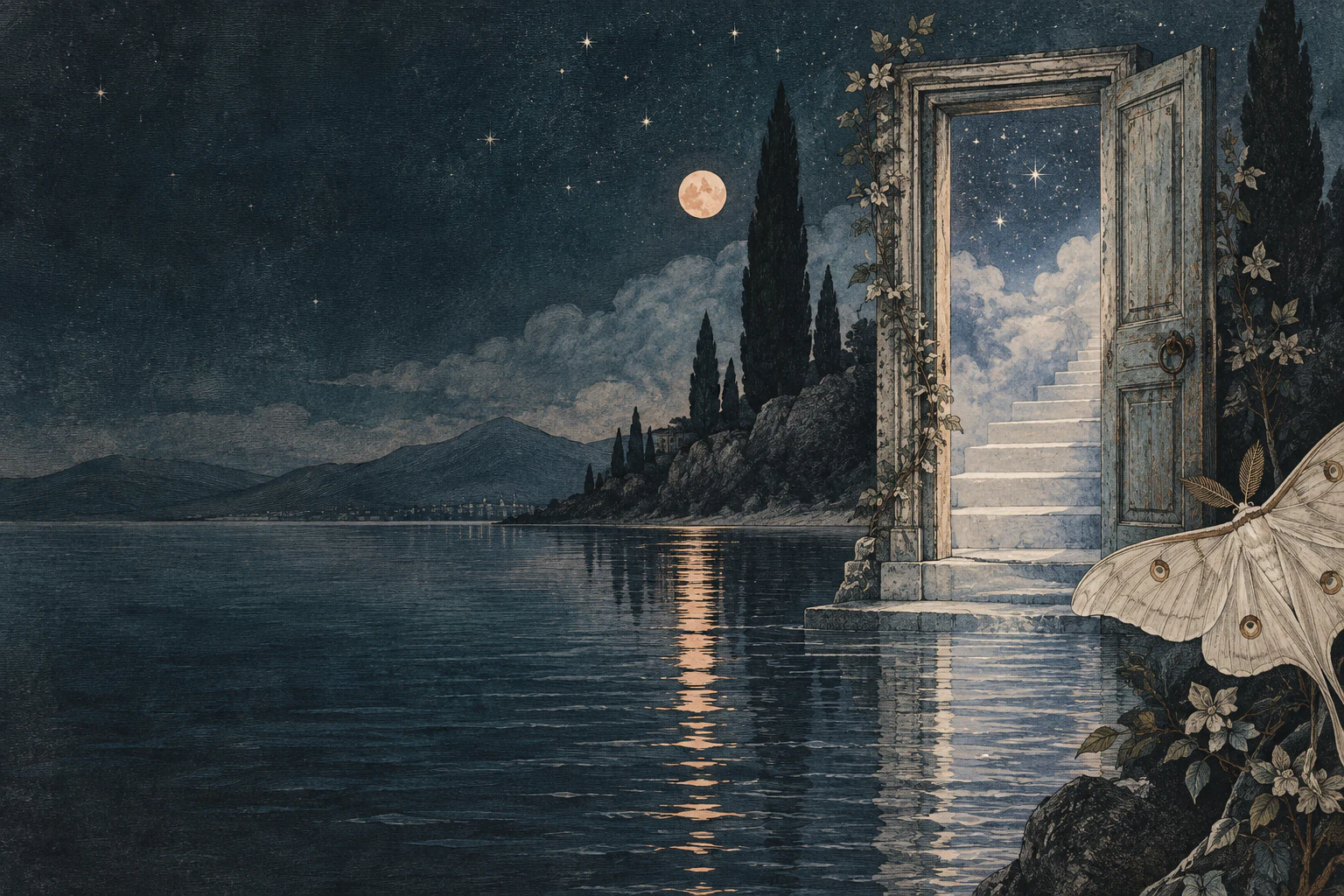
You know this door. It belongs to a hallway you have walked a hundred times, or to a house you have never entered but recognise anyway. The handle turns in your hand and the door stays put; or it is locked and the key is somehow already in your pocket; or there is no handle at all, only painted wood where one should be. Something sits behind it — a room, a stair, a voice, a line of light under the gap. You woke with the shape of that something still pressing on you. Door scenes are common precisely because they are so particular, and every particular is on your side of the wood.
Start with the lock, not with what was behind it
Run the scene back slowly. Which door was it — the front door of the house you grew up in, an office you recognise, a bedroom, a door set into a wall that has no door in daylight? What kind of stuck was it: locked, jammed, held from the other side, missing its handle, or opening onto brick? Did you have a key, and did you try it? Did you knock, call out, or press an ear to the gap? The ending matters most of all. Did the door ever open, and if it did, what was actually there — a room, a corridor, a drop, a crowd, or nothing you could see? Write down only what you remember. 'It never opened' is a complete record.
Four things a door that will not open can be doing
Test the candidates instead of accepting the first one that flatters you. A decision deferred: something you keep walking up to and not going through — an application, a conversation, a move, a letter left unopened in a drawer. An option you have decided is closed to you, whether or not anybody ever said so out loud. A boundary that is holding, which puts the dream on your side rather than against you; if you woke relieved instead of frustrated, that relief is the finding, not a failure of nerve. Or a plain rehearsal, the night walking you up to a threshold you intend to cross awake. Notice which candidate produces a small recognition rather than a grand theory.
Nothing behind a dream door is standing there in daylight
The room on the other side is not a room, and the door is not a report about a job, a person's availability or a year of your life. It carries no information about what would happen if you knocked for real — that question has a waking answer, and the only way to get it is to knock. If the scene has left you pulled toward some actual threshold, treat the pull as a feeling worth taking seriously and test it as a plan: what would trying cost, what would you do if it opened, what if it stayed shut. If nothing in your week matches the door, let it remain a door. Plenty of nights are only architecture.
Questions you might have
Does a locked door mean an opportunity is closed for good?
Not on its own. The dream records your position at a threshold, not the state of the door, and whether anything is genuinely closed is a daylight question with daylight answers. What is worth keeping is the feeling: frustration, relief, curiosity, dread. Those say how you currently stand toward the thing, which you can use whatever the lock turns out to do.
What can the free reading do with a door that would not open?
The 'One detail I can't forget' entry suits it: six selections about the door, the lock, what you woke with and what your week holds, then a free first result you may close at any step. It hands the scene back as a question about thresholds.
Six quick selections. No writing required. A free first result, with an optional paid fuller report.
Free & in-depthRecurring dreams: what to compare when the same dream returns.
Reflection prompts with a fictional example — not a customer testimonial.